The electronics and semiconductor industry is one of Thailand’s key strategic sectors under the country’s new S-Curve policy and Technology-based Economy initiative. These frameworks aim to drive national economic transformation through innovation and advanced technology. Between 2025 and 2027, the industry is projected to demand over 70,000 skilled workers, including engineers, technicians, and specialized operators, to support new investments in PCB, PCBA, EMS, and Semiconductor Packaging sectors.
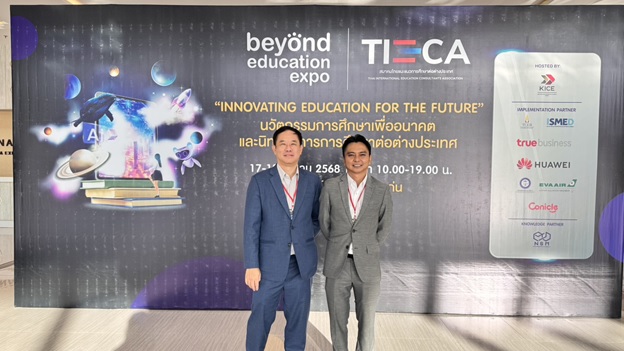
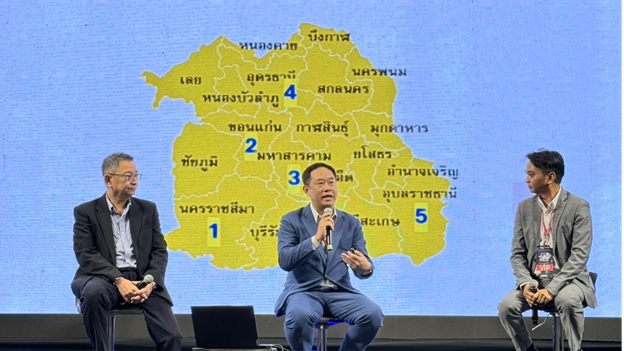
On 17 October 2025, at the seminar titled “Workforce Development in Thailand’s Electronics and Semiconductor Industry,” organized by the Thailand Printed Circuit Association (THPCA) as part of Beyond Education Expo 2025, participants discussed key trends in workforce demand, government policies, and academic collaboration to strengthen human capital for the fast-growing technology sector.
One of the main discussion points highlighted the emerging demand for specialized positions such as PCB Fabrication Specialists, Automation Engineers, AI Assembly Technicians, and Semiconductor Process Engineers—reflecting the ongoing transition toward a fully digital and intelligent manufacturing era. Educational institutions are urged to adapt their curricula to meet these evolving industrial requirements and to ensure graduates are equipped with practical, hands-on skills.
Government agencies are also playing a pivotal role in workforce development. The Board of Investment (BOI)encourages private sector investment in training and research facilities such as the Thailand Electronics Circuit Center (TECC) by providing privileges under the Merit-based Incentive Scheme. Meanwhile, the National Science and Technology Development Agency (NSTDA) and the Thailand Institute of Scientific and Technological Research (TISTR) are promoting the establishment of a Smart PCB Production Pilot Center to advance production technology and provide workforce training from vocational to university levels. Additionally, the Eastern Economic Corridor (EEC) Policy Committee continues to foster collaborative networks between government bodies, private enterprises, and academic institutions to strengthen Thailand’s position in the regional electronics and semiconductor ecosystem.
Another key focus of the seminar was the role of educational institutions in the Northeastern region, which serve as a vital foundation for producing skilled engineers and technicians to support the expansion of the electronics industry. Universities and vocational schools in the region have partnered with private organizations such as THPCA, TMEC, and leading PCB/EMS companies to co-develop curriculum programs that emphasize practical learning and industry-aligned training.
This seminar underscores THPCA’s commitment to serving as a collaborative platform linking industry, government, and academia. By enhancing Thailand’s workforce readiness in the electronics and semiconductor sectors, THPCA aims to help position the nation as a technology and manufacturing hub in Asia in the years to come.