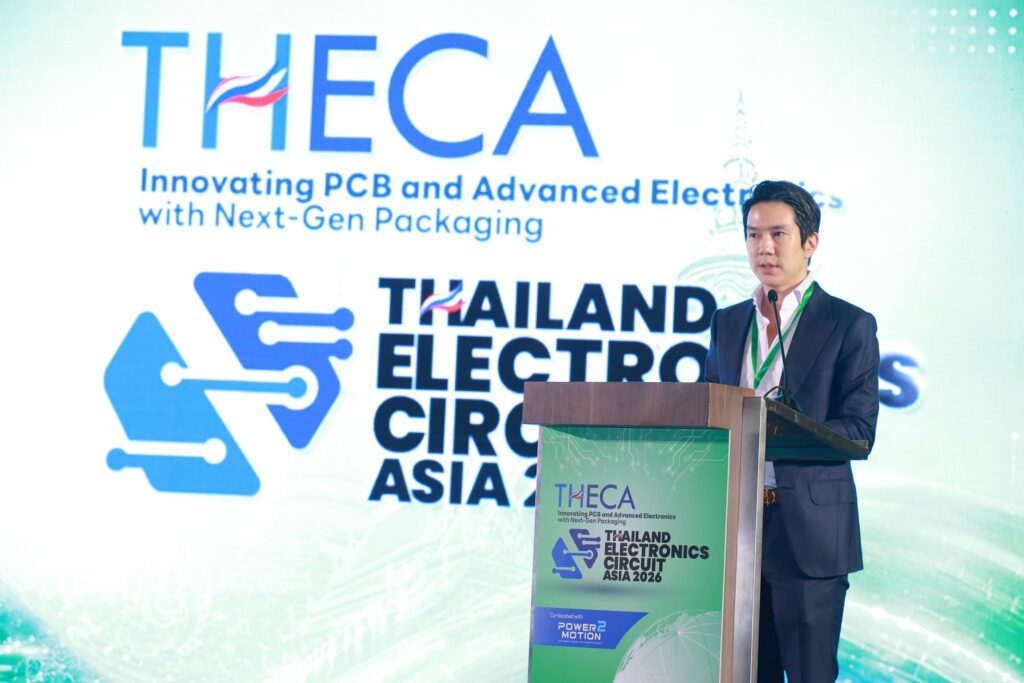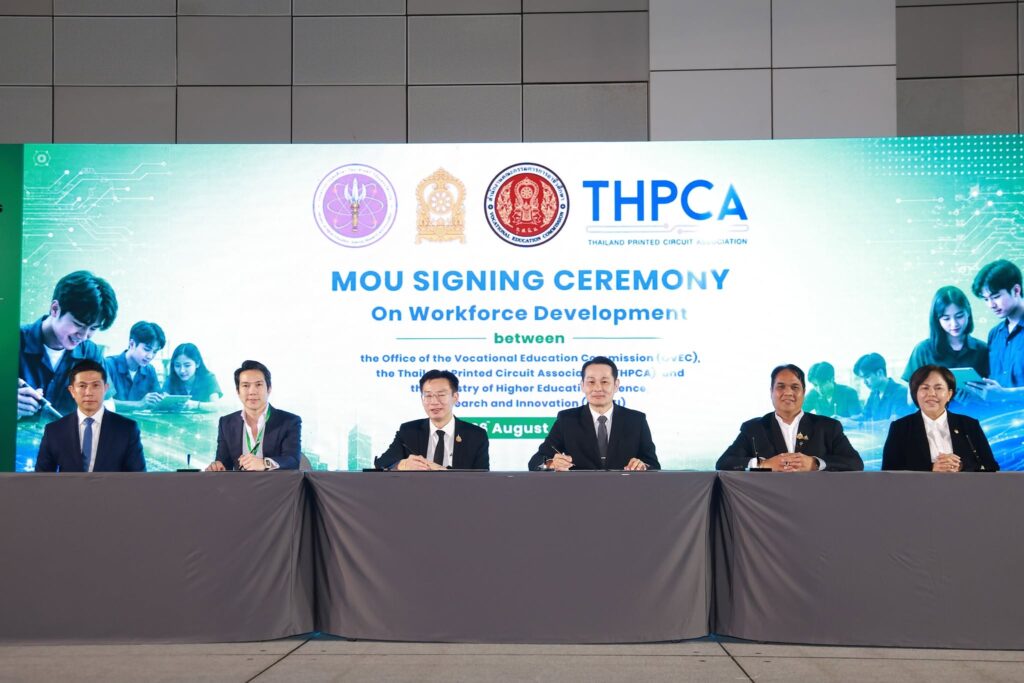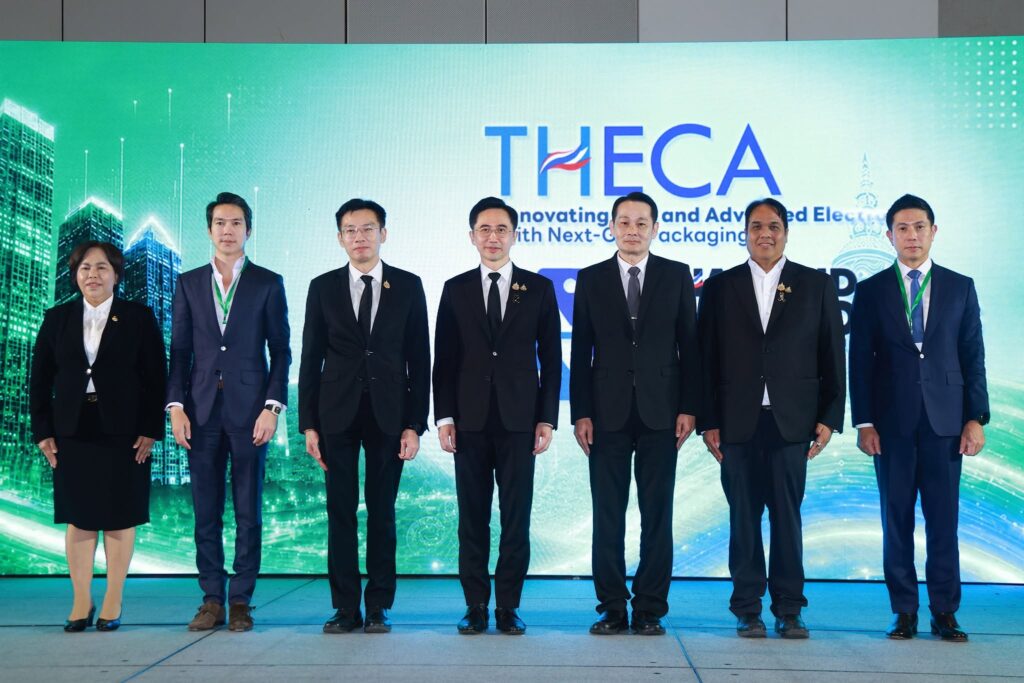
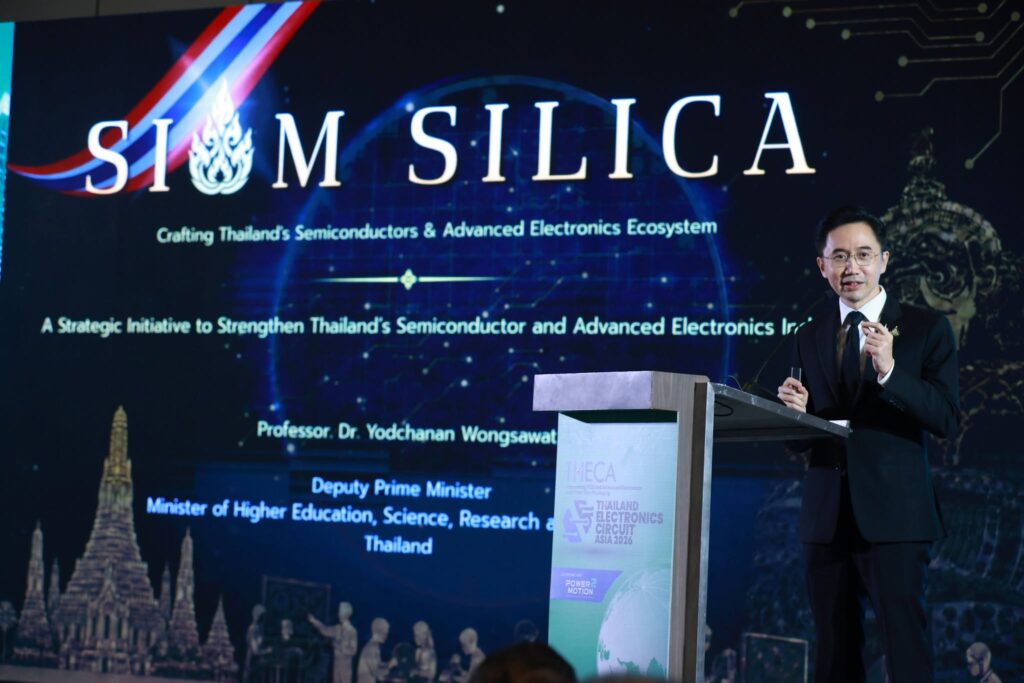
To address this challenge, the Ministry of Higher Education, Science, Research and Innovation, the Office of the Vocational Education Commission, and the Thailand Printed Circuit Association (THPCA) signed a Memorandum of Understanding (MOU) during Thailand Electronics Circuit Asia 2026 (THECA 2026) to support the development of training centers and skilled personnel for Thailand’s advanced electronics and semiconductor industries.
Addressing Thailand’s Growing Workforce Demand
Over the next five years, the PCB, PCBA, Electronics Manufacturing Services (EMS), and IC Packaging & Test sectors are expected to require approximately 70,000 technicians.
However, the challenge is not only the number of workers available. An equally important issue is ensuring that graduates and existing workers have the technical skills and practical experience required by modern electronics manufacturers.
Advanced PCB and semiconductor production requires specialized capabilities in areas such as manufacturing processes, equipment operation, quality control, automation, testing, and production engineering. Closing the gap between education and actual industrial requirements is therefore becoming increasingly important.
From Education-Led Training to Industry-Driven Workforce Development
The collaboration aims to create a more industry-driven workforce development model.
Rather than educational institutions developing graduates independently and then sending them into industry, the new approach encourages educational institutions and manufacturers to jointly develop training programs based on real workforce requirements.
The proposed development pathway will connect:
Training centers in industrial areas → practical factory training → advanced engineering and specialist development
This approach will allow students and trainees to gain both academic knowledge and practical experience in real manufacturing environments, improving their readiness to work in advanced PCB, semiconductor, and electronics production.
Building a Stronger Electronics Ecosystem
Thailand’s ability to maintain the momentum of recent electronics investment will depend on more than capital investment alone. Sustainable industry development requires progress across four important areas: workforce, technology, supply-chain capability, and cooperation between government, education, and industry.
For THPCA, workforce development is therefore a fundamental part of strengthening Thailand’s PCB ecosystem.
By working closely with government agencies, educational institutions, and manufacturers, THPCA aims to help translate real industry requirements into practical training programs and create clearer pathways for technicians, engineers, and specialists entering the electronics sector.
Supporting Thailand’s Transition Toward a Technology and Talent Hub
The long-term objective is to support Thailand’s transition from primarily serving as a manufacturing base toward becoming a stronger technology and talent hub for the global electronics industry.
A skilled workforce will be critical not only for supporting existing factories, but also for attracting higher-value investment, developing local technical capabilities, and strengthening Thailand’s position in the global PCB and advanced electronics supply chain.
The initiative also demonstrates the broader role of THECA. Beyond being an exhibition for technologies and manufacturing solutions, THECA serves as a platform connecting government, industry, education, technology providers, and workforce development organizations.
Through these collaborations, THPCA will continue supporting the development of the people and capabilities required for Thailand’s electronics industry to grow sustainably and compete internationally.